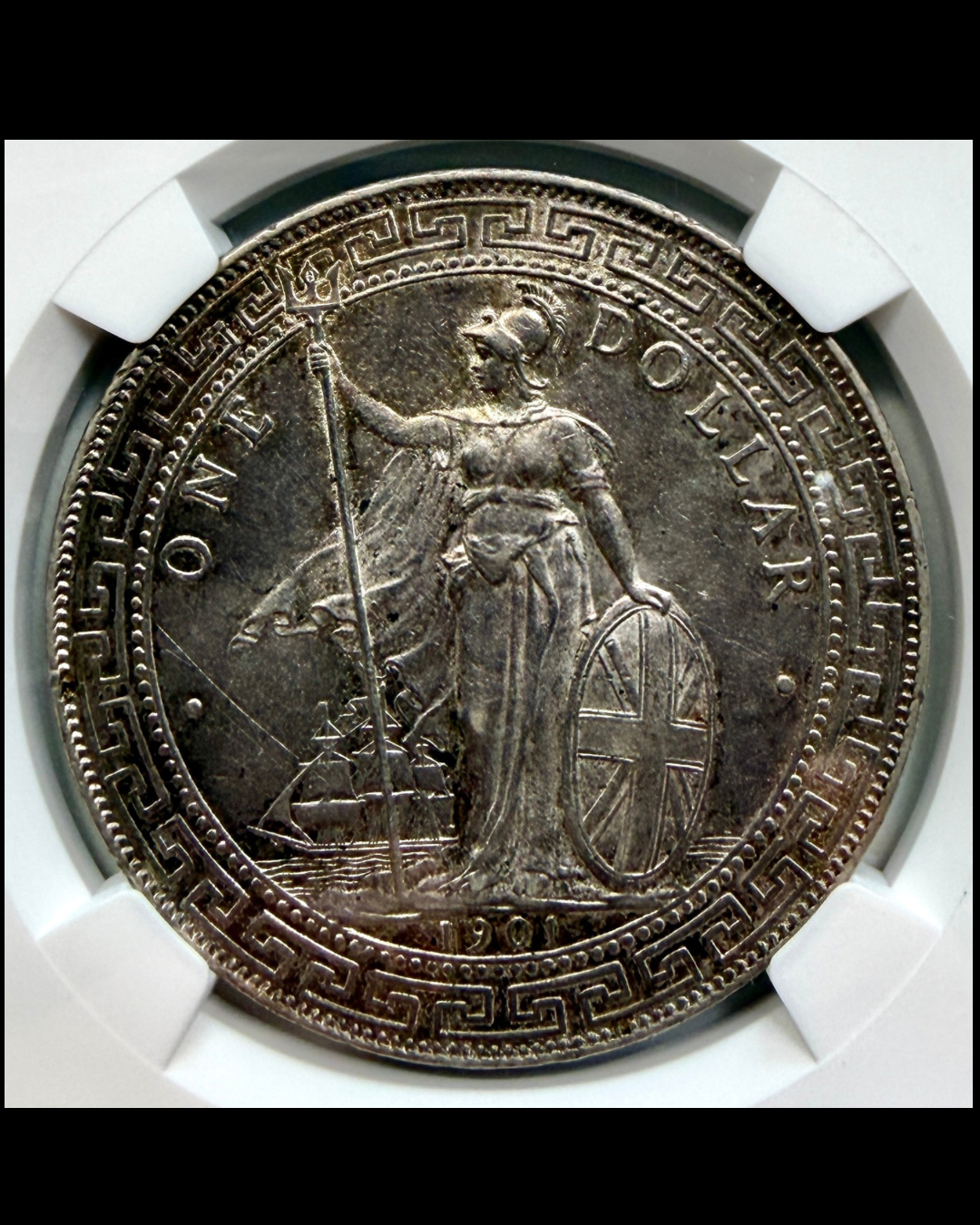
英国トレードダラーとアジアを結んだ歴史
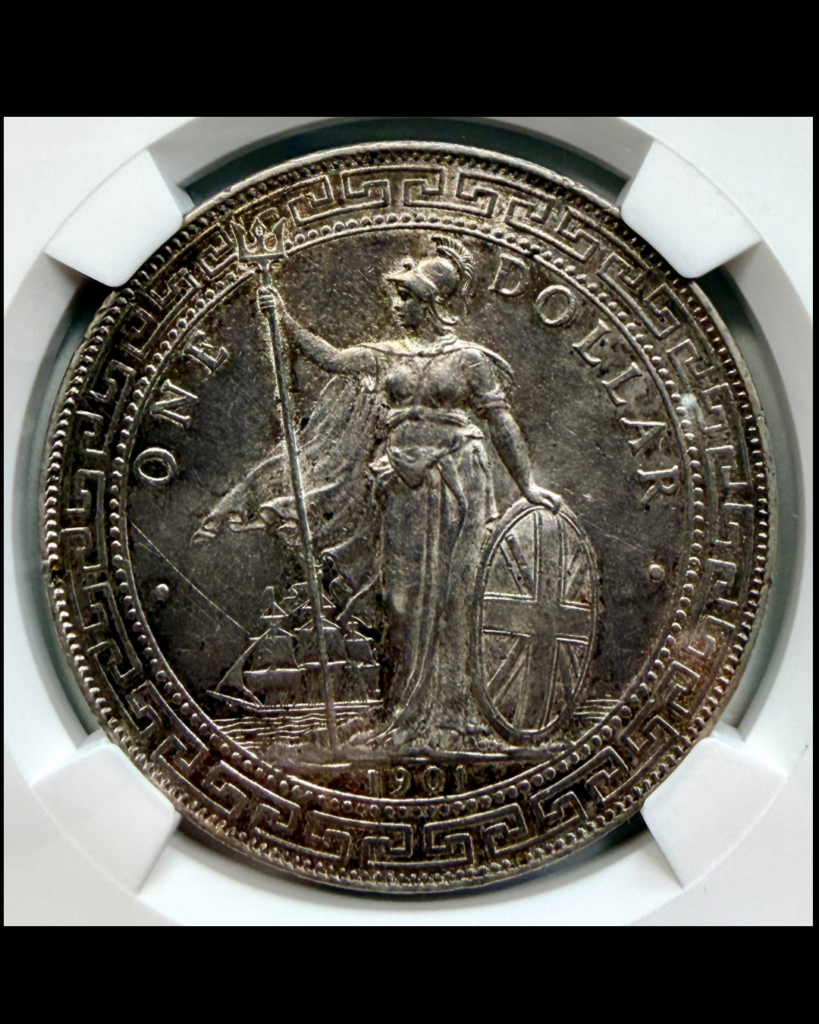
Britannia represents Britain’s maritime identity rather than the reigning monarch.
英国国内ではなく、アジアでの商取引を目的として発行された銀貨。
描かれているブリタニアは君主としてではなく、海洋国家としての英国をあらわしています。
The British Trade Dollar was created for commerce in East and Southeast Asia, where silver coins from several nations circulated across ports and trading networks.
Introduced in 1895, it was not intended primarily for everyday use in Britain.
It belonged to an international monetary environment shaped by maritime trade, colonial administration, and the widespread acceptance of silver by weight and fineness.
The obverse shows Britannia standing beside the sea.
She holds a trident and shield, while a merchant vessel appears behind her.
The composition presents Britain through maritime authority and commercial movement rather than through a portrait of the reigning monarch.
The reverse reflects the markets in which the coin was expected to circulate.
Its central design is surrounded by inscriptions stating the denomination in Chinese and Jawi script.
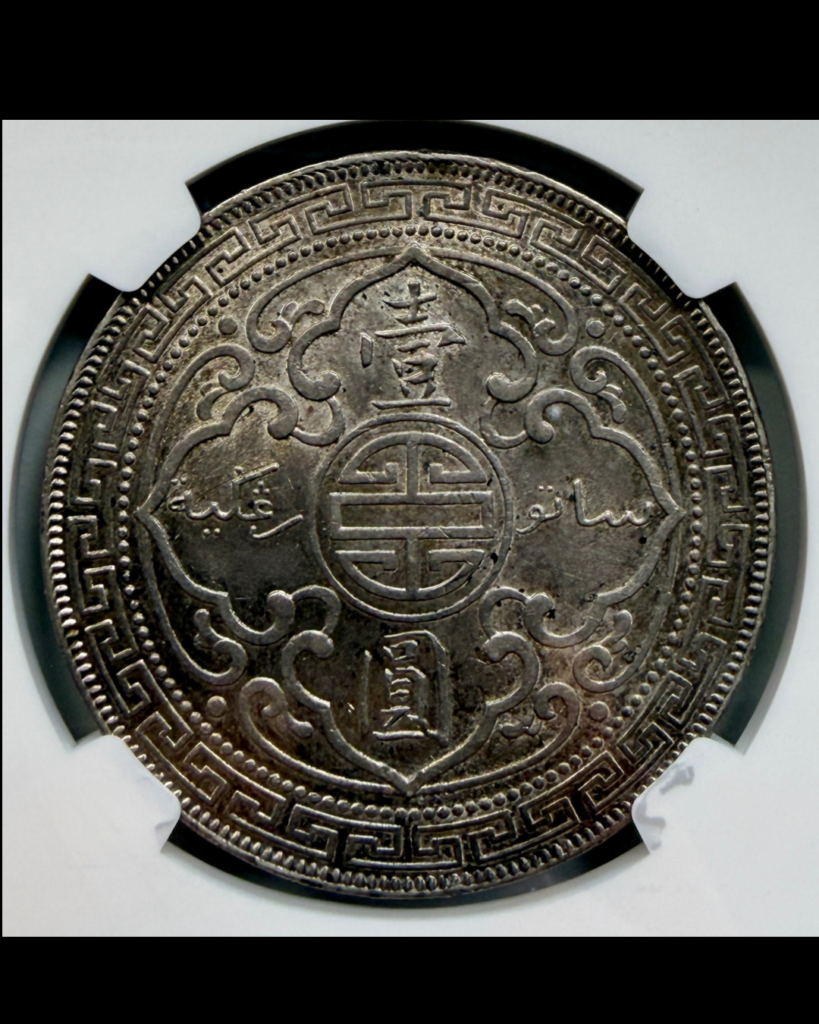
英語・中国語・ジャウィ文字が、流通地域の広がりを示しています。
The use of several writing systems made the coin legible across culturally and linguistically different trading regions.
British Trade Dollars were struck in Bombay and Calcutta, with mint marks identifying their place of production. On Bombay issues, the letter “B” appears within the central prong of Britannia’s trident.
The standard coin was struck in .900 fine silver, with a weight of approximately 26.96 grams.
These specifications placed it within the broader family of silver trade dollars circulating in Asia.
Many surviving examples bear chopmarks: small stamps applied by merchants, money changers, or commercial establishments. A chopmark may be viewed as surface damage within conventional grading, but historically it can also provide evidence that a coin was handled, tested, and accepted in commerce.
Not every Trade Dollar circulated in the same way, and not every mark can be assigned to a specific merchant or location.
Care is therefore needed when interpreting an individual coin.
Its importance lies in the wider history it preserves.
The British Trade Dollar belongs to a period in which currencies, languages, commodities, and political power moved through the same ports.
For collectors today, the coin offers more than a portrait of imperial Britain.
It records the practical realities of exchange across Asia: silver moving between markets, passing through many hands, and acquiring meaning through circulation.
The Trade Dollar still matters because its history was never confined to the country named on it.
It was designed for movement, and its identity was shaped by the places through which it travelled.
英国トレードダラーは、日本語では「英国貿易銀」とも呼ばれる銀貨です。
19世紀末、複数の国の銀貨が港や交易網を通じて行き交っていた東アジア・東南アジアでの商取引を目的として発行されました。
1895年に導入されたこの銀貨は、英国国内での日常流通を主な目的としたものではありません。
海上貿易や植民地統治、そして銀の重量と品位に対する信用を基盤とした、国際的な通貨環境の中で使用されました。
表面には、海を背景に立つブリタニアが描かれています。
右手に三叉槍、左手に盾を持ち、背後には帆船が配されています。
君主の肖像ではなく、海洋、交易、移動を通じて英国を象徴した意匠です。
裏面には、このコインが流通する地域を意識した構成が見られます。
中央の意匠を囲むように、英語に加えて中国語とジャウィ文字による額面表記が置かれています。
異なる言語や文化を持つ市場で使用されることを想定し、複数の文字体系が一枚の中に共存しています。
英国トレードダラーは、インドのボンベイ造幣局とカルカッタ造幣局で製造されました。
製造地はミントマークによって判別できます
ボンベイ造幣局で製造されたコインには、ブリタニアが持つ三叉槍の中央部分に「B」のミントマークが刻まれています。
標準的な仕様は、銀品位.900、重量約26.96グラムです。
これは、当時アジアで流通していた他国の貿易銀と比較され、商取引の中で受け入れられやすい規格でした。
現存する英国トレードダラーの中には、「チョップマーク」と呼ばれる小さな刻印が残るものがあります。
これらは、商人や両替商、商店などが銀貨を確認し、受け入れた際に押したとされる印です。
通常の鑑定では表面への損傷として扱われる場合がありますが、歴史的には、そのコインが実際の交易で確認され、複数の人や市場を渡った痕跡ともいえます。
ただし、すべての刻印について、使用者や地域を正確に特定できるわけではありません。
個々のコインを読み解く際には、証拠のない由来を断定しないことが重要です。
英国トレードダラーの魅力は、一枚の中に広い交易史が残されていることにあります。
通貨、言語、商品、そして政治的な力が、同じ港を通じて移動していた時代。
その現実を、銀という素材と複数の意匠によって今に伝えています。
このコインの歴史は、英国だけで完結するものではありません。
移動するために作られ、実際に通過した地域や市場、人々との関わりによって、その存在が形作られた一枚です。
Related Collection|関連コレクション
1901 Great Britain Trade Dollar
NGC AU58
Selected coins curated by FALJU COINS.
FALJU COINSが選定したコインコレクション。